
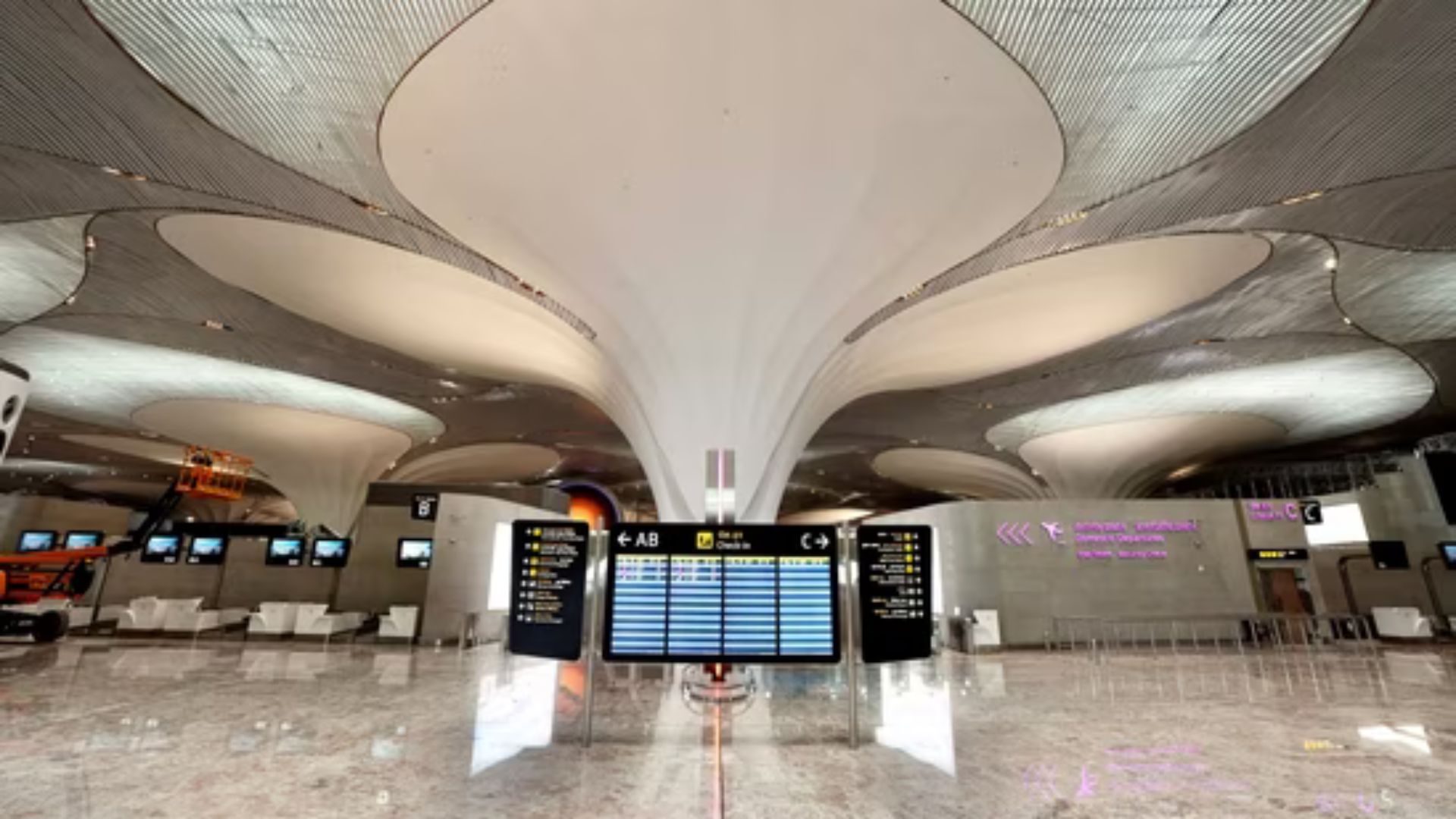
Mumbai, October 8: Prime Minister Narendra Modi will inaugurate the Navi Mumbai International Airport (NMIA) today, marking a historic milestone in India’s aviation sector. The airport, hailed as India’s first fully digital airport, is expected to transform air travel experiences with its advanced AI-enabled systems and paperless services.
Developed under a public-private partnership between Adani Airport Holdings Ltd and CIDCO (City and Industrial Development Corporation of Maharashtra), the project positions Mumbai among global cities like London, New York, and Tokyo that operate multiple international airports.
Key Highlights of the Navi Mumbai International Airport
- India’s first fully digital airport — NMIA will offer AI-powered baggage tracking, pre-booked parking, and online check-in and immigration.
- Spread over 1,160 hectares, the airport will handle 20 million passengers annually in Phase 1, eventually scaling up to 155 million passengers with four terminals and two runways.
- Built at a cost of ₹19,650 crore, the project is expected to generate over 2 lakh jobs across aviation, logistics, IT, and hospitality sectors.
- Airlines such as IndiGo, Air India Express, and Akasa Air have already confirmed operations from NMIA.
- Commercial operations begin in December 2025, initially handling 40% international traffic, expanding to 75% over time.
- AI-enabled automation will make it an “anxiety-free airport,” said Arun Bansal, CEO of Adani Airports Holdings Ltd.
- The airport will integrate multiple transport systems — including expressways, metro lines, suburban trains, and even waterways — making it India’s first multi-modal aviation hub.

Why Navi Mumbai Airport Is a Game-Changer
The Navi Mumbai International Airport is expected to ease congestion at Mumbai’s Chhatrapati Shivaji Maharaj International Airport (CSMIA) and boost regional connectivity.
With its digital-first design, NMIA will redefine the passenger journey — from AI-assisted check-ins to real-time baggage alerts.
Officials expect the project to enhance trade, tourism, and employment, making Navi Mumbai a key node in India’s $5 trillion economy vision.
Development and Vision
The Adani Group emphasized that the airport’s development reflects the Digital India mission. The project aims to align aviation infrastructure with smart technology, sustainability, and green innovation.
The terminal design draws inspiration from the konkan coastal landscape, combining modern architecture with eco-friendly materials.
When Will It Open for Passengers?
The Navi Mumbai Airport will begin commercial operations in December 2025, starting with 12-hour daily operations. As infrastructure expands, round-the-clock services will follow, connecting key domestic and international destinations.