
Tariff Escalation and Export Shock
The U.S. doubled tariffs on Indian imports to 50 percent.
This hike combines a 25 percent reciprocal levy plus a punitive 25 percent surcharge.
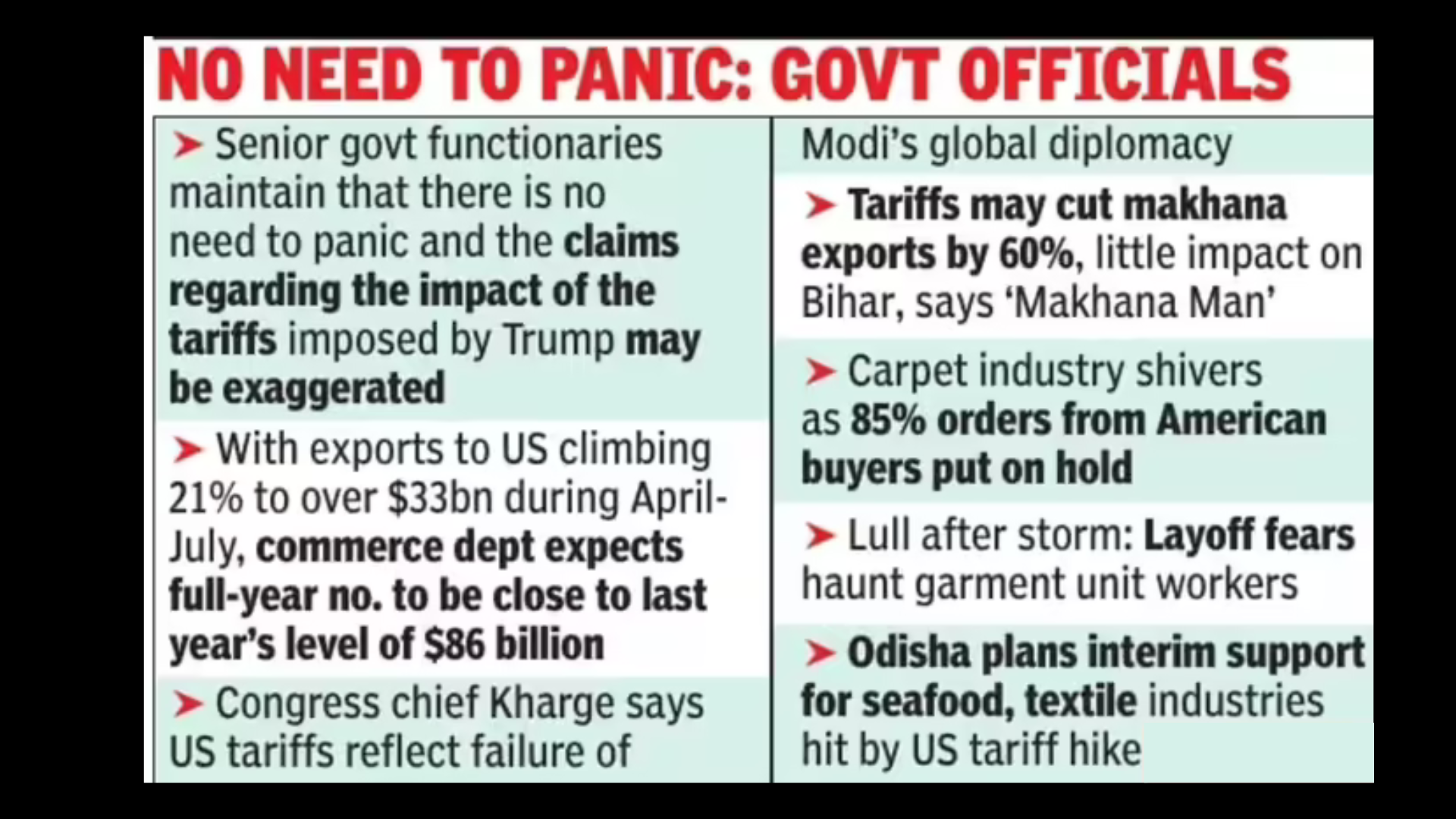
The steep increase targets sectors like garments, gems, furniture, footwear, and chemicals.
Roughly two-thirds of India’s goods exports to the U.S. are now affected. Estimates project export value drop from $86–87 billion to near $50 billion. Key concerns include loss of competitiveness, shrinking foreign demand.
Impact on small exporters could be devastating across labor-intensive sectors. India faces competition from rivals like Vietnam, Bangladesh, and China. The tariffs threaten export gains India made as a China alternative. The shock also highlights limits of India’s prior export strategies.
Exporters now face urgent pressure to pivot, diversify, reform.
Sectoral Impact and Job Risks
Textiles, apparel, gems, shrimp, carpets and furniture face the worst blow. Tariffs in these domains may climb from 9–12 percent to 50–60 percent.
Labour-intensive jobs in these sectors are deeply vulnerable to order cancellations.
Reports cite looming unemployment for up to two million Indian workers. Surat’s diamond industry has already halted operations.
Layoffs there have reached 50,000, with potentially 100,000 more at risk. Textile hubs like Ludhiana are reeling from withheld orders.The chairman of CII called the tariffs a “death knell” for competitiveness.Leathergoods, auto components and machinery are also affected. Gems, jewellery, and related MSMEs face severe cash flow strain.Even resilient sectors like electronics and pharmaceuticals stay relatively safe.
India must implement relief and supports to stem job losses.
Economic Growth and Policy Response
India’s GDP may lose up to 1 percent growth due to these tariffs. Analysts estimate a reduction of around 40 basis points in FY26-GDP. The hit comes via reduced export earnings, weakened corporate sentiment, less investment. Yet export projections show goods growth could still rise 5 percent.
Services exports may even grow by 10 percent in FY26. That suggests resilience amid reforms and diversification strategies.
India is reducing GST rates and easing export procedures. The government offers financial aid, credit relief, and export support. It also accelerates trade outreach to 40 new markets. This includes targeting the UK, Japan, EU, UAE and beyond.
Domestic demand and multipronged reforms may cushion the economic hit.
Geopolitical Fallout and Diplomatic Shifts
The tariff spat strains U.S.–India strategic trust severely.
Trump’s move reverses decades of bipartisan diplomatic gains. Experts warn this may push India closer to Russia, China, and BRICS. Modi has responded by embracing national autonomy over foreign pressure. India rejected accusations of unfair energy ties to Russia.
Tariff talks failed after five rounds, over Indian dairy and energy stances. U.S. Democrats also criticized Trump’s focus on India over larger oil buyers. They called the tariffs harmful to Americans, and damaging to ties. Economic coercion risks undercutting Quad and defence cooperation.
However, both sides still uphold strategic dialogues and bilateral forums.