
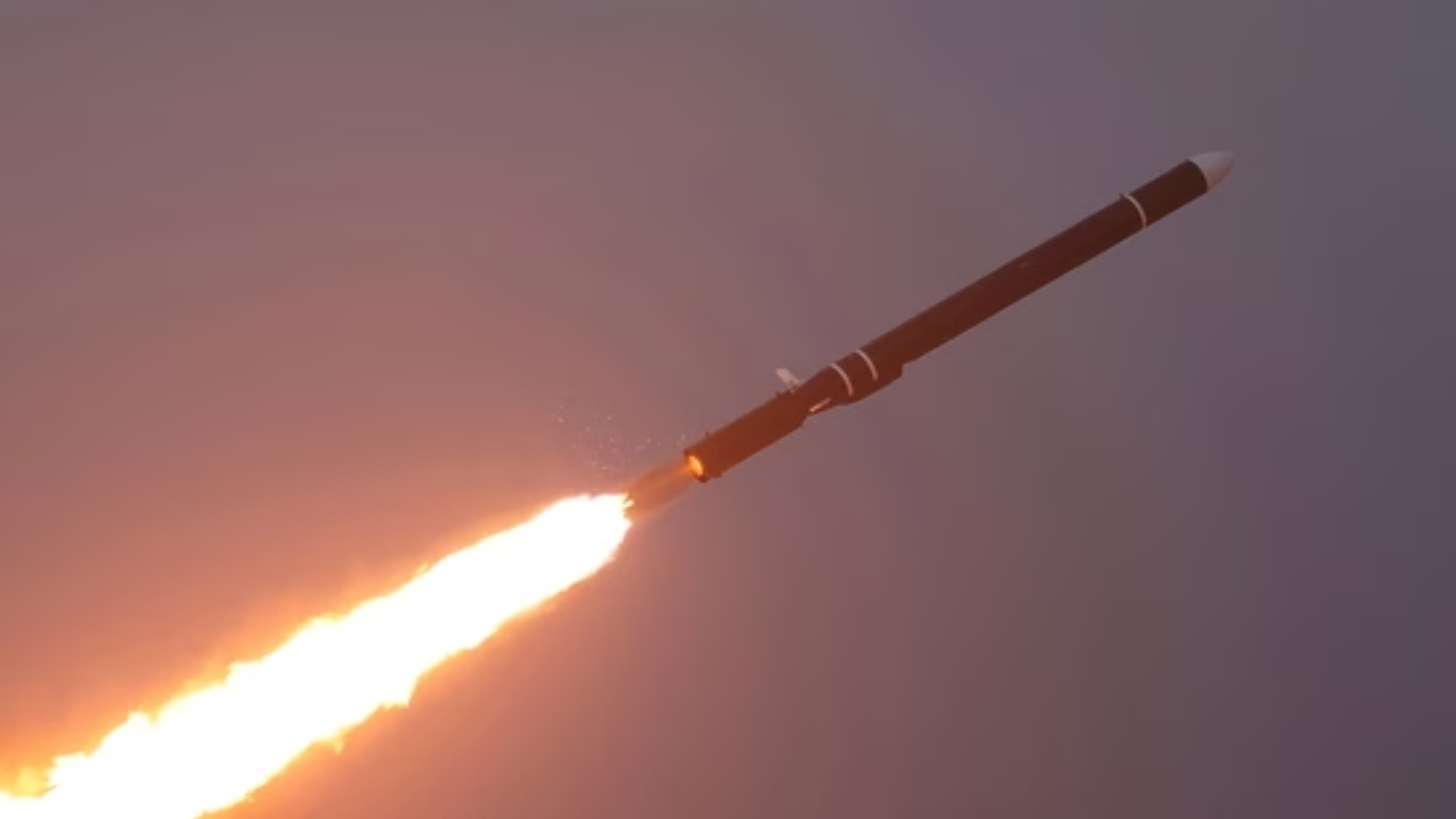
Successful Launch and Test Validation
On August 21, 2025, India’s defence forces successfully executed the Agni-5 ballistic missile test from the Integrated Test Range in Chandipur, Odisha, under the vigilant supervision of the Strategic Forces Command. The missile, a three-stage, nuclear-capable system, demonstrated full functionality and met every technical and operational benchmark outlined for the launch. This Agni-5 ballistic missile test marked a critical milestone in validating the missile’s reliability, depicting India’s growing prowess in solid-fuel rocket technologies and canisterized launch systems. The Ministry of Defence confirmed that the missile’s performance metrics were thoroughly assessed and found to be within expected parameters, reinforcing nationwide confidence in the weapon’s deterrence capabilities. With this test, India has convincingly showcased its ability to develop and execute advanced missile operations—expanding its strategic defense envelope while reaffirming its commitment to maintaining credible minimum deterrence in the region.
Technical Milestones and Enhancements
This latest Agni-5 ballistic missile test reaffirmed a range of technical advancements that underscore the system’s strategic relevance. Agni-5, with its three-stage solid-fuel design and canister-based launch mechanism, offers enhanced mobility and rapid deployment capabilities. The missile employs an advanced inertial navigation system supplemented by satellite guidance, significantly boosting targeting precision. Its tested range, exceeding 5,000 km, enables coverage of distant targets including northern Chinese territories. The success of this test underscores not just the missile’s operational readiness but also India’s mastery over intricate propulsion technology and high-accuracy targeting systems. With these enhancements, Agni-5 continues to strengthen India’s deterrent posture, ensuring the missile remains a linchpin in land-based strategic defense—with the capacity to reach multiple strategic regions swiftly and effectively.
Strategic Significance and Regional Impact
The successful Agni-5 ballistic missile test holds profound strategic implications for South Asian security architecture. Boasting a range that stretches across much of Asia, including regions of strategic interest such as northern China, this missile significantly elevates India’s deterrence capability. The test arrives amid shifting geopolitical dynamics, signaling India’s resolve to fortify its defensive preparedness. Neighboring countries like Pakistan have been closely monitoring such developments, given their implications for regional power equilibrium. By reinforcing its medium-to-long-range strike capability, India sends a clear message: its security strategy is both forward-looking and robust, capable of not merely defending territorial integrity, but also of shaping deterrence dynamics at a broader regional level. This test therefore isn’t just a technological triumph—it is a strategic statement in the evolving narrative of South Asian defense balance.
Role of Strategic Forces Command and DRDO
The recent Agni-5 ballistic missile test showcases the seamless coordination between India’s Strategic Forces Command (SFC) and the Defence Research and Development Organisation (DRDO). The SFC orchestrated the launch with precision, ensuring that all safety protocols and operational directives were tightly followed. Meanwhile, DRDO’s contribution spanned from missile design and testing to advanced propulsion systems and guidance integration. This collaboration embodies India’s institutional strength in blending strategic command oversight with cutting-edge scientific expertise. The unified effort between these agencies not only delivered a successful test but also highlighted the maturity of India’s defense R&D ecosystem. As the backbone of India’s land-based nuclear deterrence, such triumphs strengthen the foundation for future developments in missile technologies and strategic readiness.
Future Trajectory and Expansion of Capability
With the Agni-5 ballistic missile test now validated, India positions itself for future advancements in missile technology. Following 2024’s Mission Divyastra—India’s first MIRV (Multiple Independently Targetable Reentry Vehicle) test—the path is set for integration of multiple warhead systems and enhanced maneuverability. Developers are also exploring specialized variants like bunker-buster and air-burst configurations to address hardened and underground threats. Meanwhile, the inception of the upcoming Agni-VI—with its projected 10,000+ km range and MIRV capability—suggests a clear trajectory towards expanded intercontinental deterrence. The recent test lays the groundwork for this evolution, ensuring that India remains at the forefront of missile innovation and strategic defense capability for years to come.