
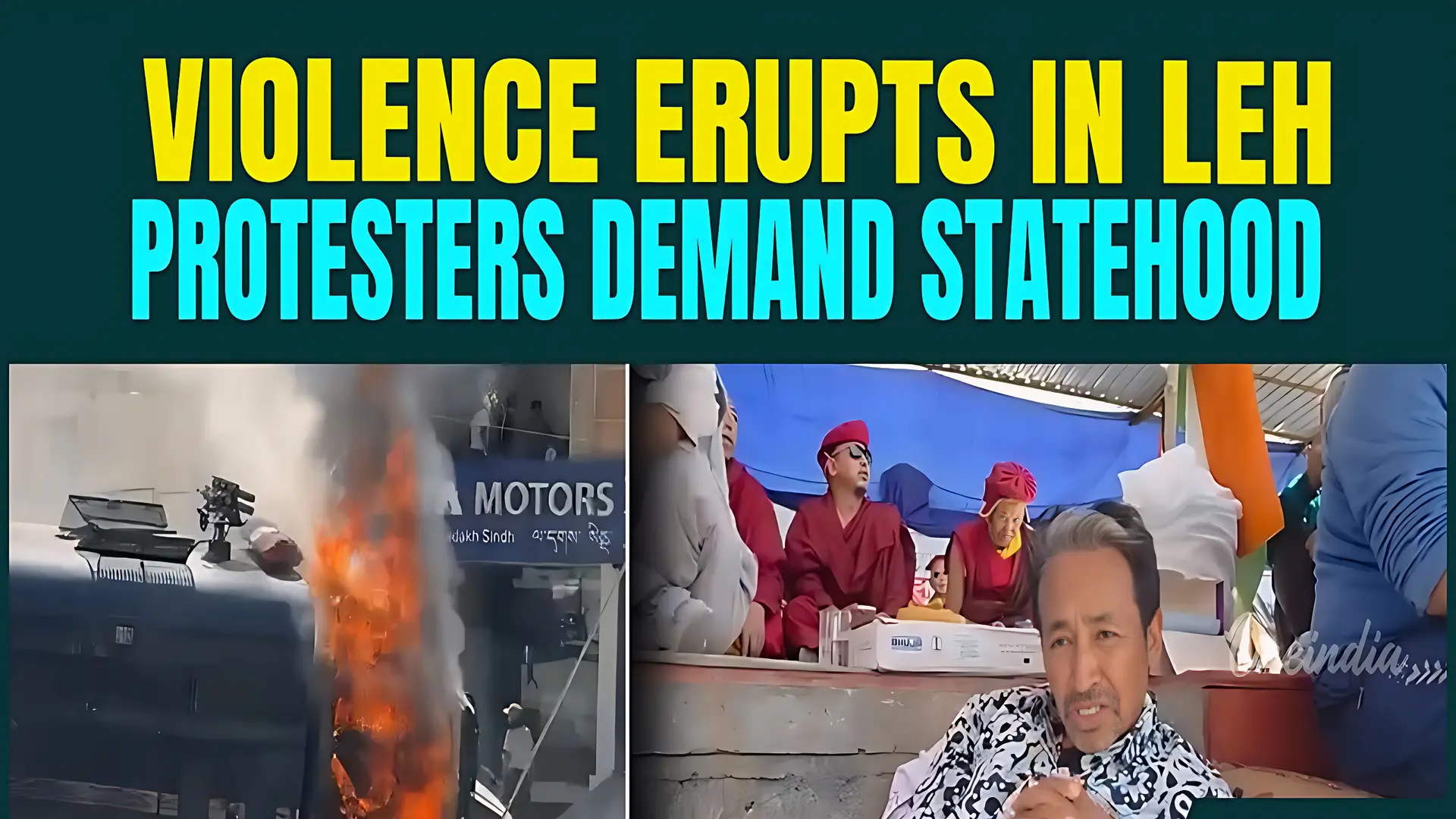
Leh, Ladakh: The usually calm streets of Leh turned volatile on Tuesday, September 24, 2025, as protests demanding statehood for Ladakh and constitutional safeguards erupted in violence. Demonstrators torched the local Bharatiya Janata Party (BJP) office and a Central Reserve Police Force (CRPF) vehicle, sparking clashes with security personnel that left at least 10 people injured, including two in critical condition.
The Statehood Demand: What Protesters Want
The unrest is the latest chapter in Ladakh’s struggle for political rights since it was carved out of Jammu and Kashmir as a Union Territory in August 2019. While many welcomed the decision at the time, dissatisfaction has grown steadily.
At the heart of the agitation are two key demands:
- Full statehood for Ladakh — to give the region greater legislative and administrative control.
- Inclusion under the Sixth Schedule of the Constitution — to protect tribal land ownership, job reservations, and cultural identity.
Protesters argue that without these safeguards, Ladakh risks losing its fragile ecosystem and tribal character to outside investment and unchecked development. Rising unemployment has further fueled frustration, especially among the youth.
The Role of the Leh Apex Body
The protests are being led by the Leh Apex Body (LAB), a coalition of political, social, and religious organizations that has emerged as the key voice for Ladakh’s demands. Along with the Kargil Democratic Alliance (KDA), the groups have pushed for joint negotiations with the Centre, calling the current unrest a reflection of local anger and neglect.
Sonam Wangchuk’s Appeal for Non-Violence
The movement gained international attention earlier this year when renowned climate activist Sonam Wangchuk undertook a 35-day hunger strike in Leh to highlight Ladakh’s demands. While ending his strike earlier this month, Wangchuk reiterated his support for the cause but expressed concern over the violent turn.
“Our movement must remain peaceful. Violence will weaken our position and damage Ladakh’s image,” Wangchuk said, urging protesters to return to non-violent methods inspired by Gandhian principles.
Government Response and Upcoming Talks
The central government has responded by announcing tripartite talks on October 6, 2025, involving representatives from Leh, Kargil, and New Delhi. Officials have hinted that discussions will focus on administrative powers, constitutional safeguards, and mechanisms to protect Ladakh’s unique culture and environment.

Security has been tightened because of violence in ladakh, with reinforcements deployed to prevent further escalation. Police sources confirmed ongoing surveillance of protest hotspots to ensure public safety.
Causes of Violence in Ladakh
The agitation in Ladakh has implications far beyond the Himalayan region. Analysts say the protests underscore growing tensions between New Delhi and border states seeking greater autonomy. With Ladakh’s strategic importance along the China border, the outcome of these talks will be closely watched at both the national and international levels.
For residents, however, the issue is far more immediate — jobs, cultural survival, and the right to decide Ladakh’s future. As one protester in Leh put it, “We want development, but not at the cost of our identity.”
The Road Ahead
Whether the October 6 talks will bring a breakthrough remains uncertain. For now, Ladakh stands at a crossroads — between aspirations for self-rule, growing youth anger, and a delicate balance between development and preservation. The next few weeks may prove decisive for the region’s future.