Why NASA's Roman Space Telescope Hunts Planets Nobody Can See
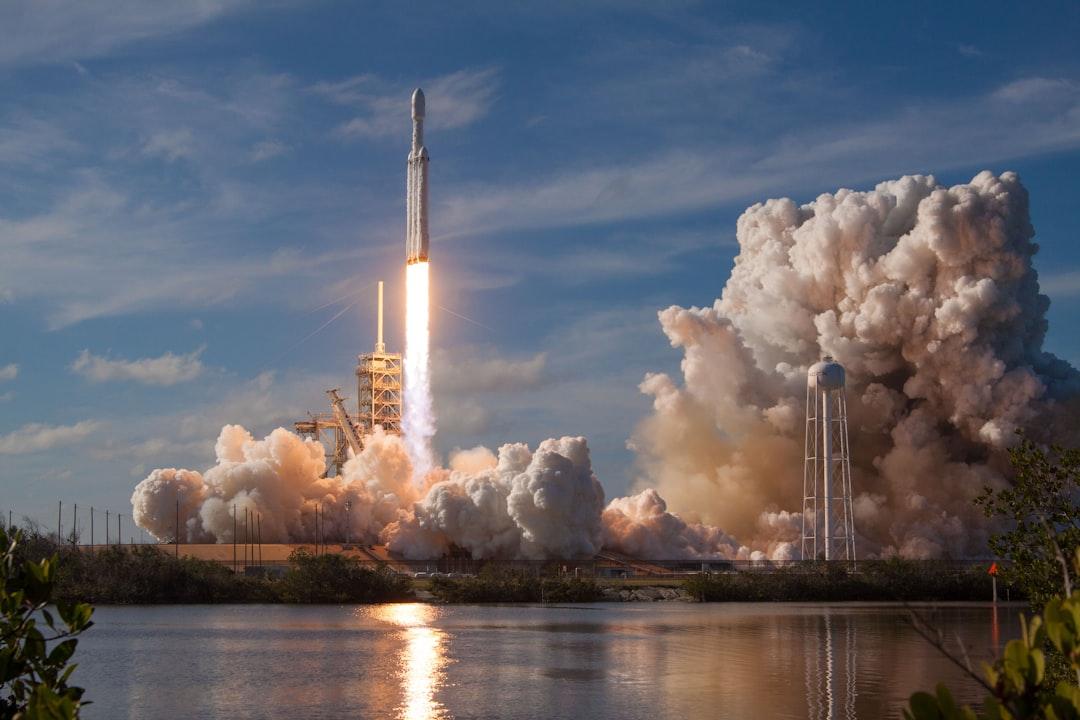
On the morning of 30 August 2026, a Falcon Heavy is scheduled to lift off from Launch Complex 39A in Florida carrying an observatory that almost nobody outside astronomy can name. It has a mirror exactly the same size as Hubble's — 2.4 metres, a hand-me-down from a decommissioned spy satellite programme. It cost roughly four billion dollars. It arrived at the launch pad about eight months ahead of schedule, which for a NASA flagship is closer to a miracle than a milestone.
And the strangest thing about it is that it was not built to look at anything.
Hubble was built to look at things. So was the James Webb Space Telescope. You point them, you stare, you come back with a portrait of one object so detailed it ends up on a postage stamp. The Nancy Grace Roman Space Telescope will barely do that. It will spend most of its five-year primary mission sweeping the same enormous patches of sky over and over, photographing hundreds of millions of stars that it has no particular interest in, waiting for a few thousand of them to flicker.
That flicker is the point. It is how you find a planet that emits no light, orbits no star, and has never been seen by anything.
What the Roman Space Telescope actually is
Roman is an infrared observatory that will sit at the second Lagrange point, L2 — the same gravitationally quiet parking spot about 1.5 million kilometres from Earth where JWST works, on the permanent night side of our planet's shadow.
Its main camera, the Wide Field Instrument, is built from eighteen detectors ganged together into an array of roughly 300 megapixels. The raw pixel count is not what matters. What matters is the angle. Roman's field of view is about a hundred times larger than Hubble's infrared camera at the same resolution. One Roman exposure captures as much sky as a hundred Hubble exposures, at the same sharpness.
Put that another way. A survey that would take Hubble a thousand years, Roman finishes in a decade. That single number — a hundred times wider — is the entire mission. Everything else is a consequence of it.
Alongside the Wide Field Instrument rides a second, smaller device: the Coronagraph Instrument, a technology demonstration designed to blot out a star's light and photograph the faint planets beside it directly. It is not the main survey. It is a rehearsal for the telescopes that will come after Roman, the ones expected to image an Earth-like world around a Sun-like star.
The Portrait Problem
Here is a way to think about why a telescope like this had to exist. Call it the Portrait Problem.
For thirty-five years, almost every major space telescope has been a portrait machine. Enormous light-gathering power, narrow field, exquisite depth. Point it at one galaxy, one nebula, one transiting planet, and it tells you nearly everything about that object. This works beautifully, and it has a hidden cost: a portrait cannot tell you whether its subject is typical.
You can photograph a thousand faces in perfect detail and still have no idea what the population looks like, because you chose the faces. Astronomy has spent decades finding extraordinary objects and then arguing about whether they are extraordinary or merely the first ones easy enough to notice. That argument is running right now over JWST's strangest discovery — the small crimson smudges in the deep field that may turn out to be an entirely new class of object called a black hole star. Are there three hundred of them because they are rare, or because three hundred is how many a portrait telescope happens to catch?
A census answers what a portrait cannot. It does not ask what is that? It asks how many, and where, and in what proportions? Roman is the first flagship built to be a census rather than a portrait. It gives up depth on any single target in exchange for statistical honesty about all of them.
This is why the mission looks underwhelming when you describe it and is not. Roman's headline output will not be one gorgeous image. It will be a catalogue.
How you photograph a planet that gives off no light
The technique Roman leans on for planet-hunting is gravitational microlensing, and it is the closest thing observational astronomy has to a magic trick.
Mass bends spacetime, so mass bends light. When one star passes almost exactly in front of a more distant star — from our particular viewing angle, by pure chance — the nearer star's gravity acts as a crude lens. The background star does not shift. It brightens, smoothly, over days or weeks, then fades back. Nothing about the foreground object needs to be visible for this to happen. It only needs to have mass.
Now add a planet orbiting that foreground star. The planet's own gravity puts a second, much sharper spike inside the main brightening curve — a blip lasting hours to days. Read the shape of that blip and you can extract the planet's mass ratio and its distance from its star.
Two things make this method special. First, it does not care whether the planet is lit. Transit surveys need a planet to cross its star's face; direct imaging needs the planet to reflect or glow. Microlensing needs only gravity, which every planet has. Second, it is most sensitive exactly where the other methods are weakest — at wide orbits, out past where Jupiter sits in our own system, and beyond.
The catch has always been that microlensing events are unrepeatable. Each alignment happens once and never again, and you cannot predict which star will do it. The only way to catch them is to watch enormous numbers of stars continuously. That is not a job for a portrait telescope. It is a job for a hundred-times-wider one, staring at the crowded galactic bulge for weeks at a time, taking an image every fifteen minutes.
The worlds with no sun
Which brings us to the category that gives this mission its strangeness: free-floating planets, usually called rogue planets. Worlds not orbiting any star at all, drifting through interstellar space in permanent darkness.
They are thought to form the ordinary way, inside a young planetary system, and then get slingshotted out by a gravitational argument with a larger sibling. Once ejected, they are essentially undetectable. No star to transit. No reflected light. Nothing but a cold mass moving through the dark.
Microlensing sees them anyway, because gravity is all it needs. Roman's Galactic Bulge Time-Domain Survey is expected to detect on the order of a thousand free-floating planets, including a meaningful number down near Earth mass — and it will do that while surveying only a narrow strip of the Milky Way. Alongside them, Roman should turn up roughly 2,600 bound exoplanets on wide orbits, a population that current catalogues barely touch.
Extrapolate a Roman-shaped detection rate across the whole galaxy and the implication is uncomfortable and wonderful at the same time: sunless planets may outnumber stars. The default condition of a planet in this galaxy might not be a warm orbit around a sun. It might be exile.
That is what the phrase "hidden worlds" is doing. Not billions of individually catalogued planets — Roman will name thousands, not billions. But thousands of measured cases, sampled honestly enough to say something statistically defensible about the billions we will never see one at a time.
The other half of the mission nobody mentions
Planet-hunting is only one of Roman's two jobs, and arguably not the one it was commissioned for.
The High Latitude Wide Area Survey will map hundreds of millions of galaxies across roughly a third of the sky, measuring their shapes and distances. From that map, cosmologists extract two things: how clumpy matter is on the largest scales, and how fast that clumping has changed across cosmic time. Both are sensitive to dark energy — the unexplained pressure that is pushing the universe apart faster and faster.
Dark energy is currently a placeholder. We can measure its effect precisely and we cannot say what it is. Roman's contribution will be to nail the expansion history tightly enough that some proposed explanations survive and others do not. It is the same instinct as the planet survey: not one brilliant observation, but so many ordinary ones that the wrong theories stop fitting.
The same telescope will also produce a supernova survey, a map of the Milky Way's structure, and a public data archive designed for scientists who have not been born yet to mine. That last part matters more than it sounds. Roman's data is scheduled for near-immediate public release, without a proprietary period — an unusually open posture for a flagship, and one that assumes most of the discoveries will be made by people who had nothing to do with building it.
Why a census changes how it feels to look up
There is a particular kind of loneliness in the portrait era of astronomy. Every new world arrives as an individual — a name, a number, a press release, a artist's impression of a coastline nobody has seen. It is thrilling and it does not accumulate into a worldview.
Censuses accumulate. When you learn that most planets may be sunless drifters, the sky reorganises itself in your head. The stars stop being the inventory and start being the exceptions — the small fraction of matter that got hot enough to announce itself. Everything else is out there in the dark, unlit, going somewhere, and it has been that way the whole time you have been alive.
Humans are unusually bad at holding that kind of fact. We are built for the specific: this mountain, this eclipse, this person. It is why a total solar eclipse rearranges people emotionally in a way that a statistic about orbital mechanics never will, and why the current race to the Moon's south pole is understood in terms of flags and firsts rather than water-ice inventories. A census is the opposite of that instinct. It asks you to feel something about a distribution.
Roman is, in that sense, a piece of emotional infrastructure as much as scientific infrastructure. It is a machine for making the unremarkable countable, on the theory that once a thing is counted honestly, we eventually find a way to care about it. The same shift happened with exoplanets generally: in 1995 there were none, and now there are nearly six thousand, and a generation has grown up assuming other worlds are ordinary. That assumption was not argued into existence. It was counted into existence.
What happens next
Launch is targeted for 30 August 2026. Roman then takes about a month to reach L2, followed by a commissioning period of roughly six months while the instruments cool, the optics are aligned, and the team works out how the hardware actually behaves in flight rather than in a test chamber. First survey data should follow in 2027.
The early results to watch are not the pretty ones. Watch the first Galactic Bulge Time-Domain Survey season, and specifically the rate of short-duration microlensing events — the hours-long blips that indicate low-mass free-floating planets. If that rate comes in near predictions, the rogue-planet population estimates hold. If it comes in high, the galaxy is stranger and emptier than the models say, and a lot of planet-formation theory needs rewriting.
Also watch the dark energy equation-of-state constraints from the first High Latitude survey release. If Roman's numbers agree with the recent hints that dark energy may not be constant over time — that it may be weakening — that becomes the most important result in physics this decade, and it will arrive not as a discovery but as an error bar shrinking until something breaks.
None of this will look like a moment. That is the nature of a census. The telescope goes up in August, the catalogue starts filling in 2027, and somewhere in the middle of the decade the sky quietly stops meaning what it used to.
Sources
- NASA Science — Nancy Grace Roman Space Telescope mission overview
- NASA Science — Rogue Planets and Roman's microlensing survey
- NASA — Unveiling Rogue Planets With NASA's Roman Space Telescope
- SpacePolicyOnline — NASA Sets Launch Date for Roman Space Telescope
- Space.com — Roman Space Telescope launch preparations, live updates