Hitchhiking Explained: Why It Collapsed and Where It Still Works

There is a specific kind of boredom that only exists at the edge of a road. You have been standing for forty minutes. Two hundred cars have passed. You have started reading number plates for entertainment, revised your cardboard sign twice, and moved thirty metres up the shoulder because you decided the sightline was better.
Then a car indicates, slows, and stops, and the next four hours of your life are handed to somebody you have never met.
Hitchhiking gets written up periodically as a comeback — the authentic, low-carbon, budget alternative to package travel. Some of that is true. Most of the way it gets explained is not, and the interesting story is not "it's back." It is why it went away, because the usual answer is wrong.
Is hitchhiking actually making a comeback?
Honestly: partially, and mostly among a specific group.
There is no reliable global measure of hitchhiking volume — nobody counts thumbs. What can be observed is that the practice never disappeared in large parts of the world, that it has visibly thinned in wealthy countries over fifty years, and that there is a small, well-organised revival community around resources like Hitchwiki, hitchhiking races, and long-distance trip reports.
What has genuinely changed is the profile. In 1970 a hitchhiker was very often somebody with no other way to get where they were going. Today, in Europe, North America and Australia, a hitchhiker is usually somebody who has other options and is choosing this one. That is a completely different activity wearing the same clothes — recreation rather than transport.
The Empty Seat Economy
Here is the frame that explains everything else. Call it the Empty Seat Economy.
Every car on a road is carrying unused capacity. A five-seat vehicle with one person in it is 80% empty, moving anyway, burning fuel it would burn regardless. Across a national road network at any moment, that unused capacity is enormous — vastly larger than the entire commercial transport fleet.
Hitchhiking is simply the oldest interface for accessing that surplus. It has no platform, no pricing, no rating system, and no booking. It runs on a single question asked at the roadside: will you give me some of what you are wasting?
The important implication is that hitchhiking's health has almost nothing to do with how nice people are. It depends on three conditions holding at once: the surplus has to exist, it has to be reachable, and asking has to be socially legible. Break any one and the practice collapses, no matter how trusting the population is.
That is the lens for the rest of this. Not a story about declining trust. A story about a resource that got harder to reach.
Why it collapsed — and it wasn't crime
The standard explanation is that a wave of highly publicised crimes in the 1970s frightened everyone off. That happened, and it mattered culturally: the Santa Rosa hitchhiker murders of 1972–73, then a decade of films — The Texas Chain Saw Massacre in 1974, The Hitcher in 1986 — that made a stranger at the roadside into a horror premise.
But the data never supported the panic. A 1974 California Highway Patrol study, one of the few serious attempts to measure it, found that hitchhikers were not over-represented in crimes or accidents beyond their numbers. Researchers who have gone back over the period tend to conclude that the moral panic was a real cultural event attached to a statistically unremarkable risk.
What actually killed it was more boring, and it is the Empty Seat Economy failing on two of its three conditions.
The surplus stopped being social. In 1941, roughly half of American households did not own a car. Today it is under 10%. The same curve, offset by a decade or two, runs through Western Europe, Japan and Australia. When most people had no car, riding with someone who did was an ordinary transaction between neighbours. When almost everyone has a car, the person at the roadside is no longer a peer without a vehicle. They are an anomaly, and anomalies get read as risk.
The surplus became unreachable. This is the underrated one. Motorways and interstates removed the physical circumstances hitchhiking requires. You cannot flag down a car at 120 km/h. You cannot stand on a controlled-access carriageway — it is illegal in most of Europe and North America, and correctly so. The old road system was full of junctions, town approaches and traffic lights where a driver had three seconds to look at you and decide. The new one is designed to eliminate exactly those moments.
Add the collapse of the third condition — asking became socially illegible, because a request that used to be normal now reads as either desperation or eccentricity — and the practice had nowhere left to stand.
What the apps did
Here is the part that reframes the whole thing: the empty seats never went anywhere. They got a price.
BlaBlaCar, founded in France in 2006, is the Empty Seat Economy with a booking layer, a payment layer and a rating system bolted on. A driver going from Lyon to Marseille lists three spare seats, passengers book them, money changes hands, both sides rate each other afterwards. It is hitchhiking with the uncertainty removed, and it operates at a scale hitchhiking never reached.
Ride-hailing did something different but related — it converted the surplus into a labour market, where the driver is working rather than sharing.
So the honest way to describe the last twenty years is not that hitchhiking died and something replaced it. Hitchhiking was unbundled. The transport function moved to platforms, which do it better: predictable, scheduled, accountable, and safer in the specific sense that both parties are identified.
What the platforms could not carry across was the part that has no price — the randomness, the obligation-free encounter with someone you would never otherwise have met, the fact that neither of you chose each other. That residue is what modern recreational hitchhiking is actually about. Everything useful was taken. What is left is the experience.
Where it still works
Hitchhiking is not uniformly hard. It is easy in places where the three conditions still hold, and near-impossible where they do not.
It tends to work well across much of the Balkans, Romania, Turkey, Iran, Central Asia, parts of the Caucasus, rural Ireland, Iceland, New Zealand's South Island, and large stretches of Latin America. The common factors are legible: two-lane roads rather than motorways, lower car-ownership saturation or a strong hospitality norm, and long distances between settlements where a stranger on foot is obviously going somewhere specific.
It is hard in most of Western Europe outside the service-station system, hard in the United States away from certain rural corridors, and hard almost anywhere the road network has been fully upgraded to controlled access.
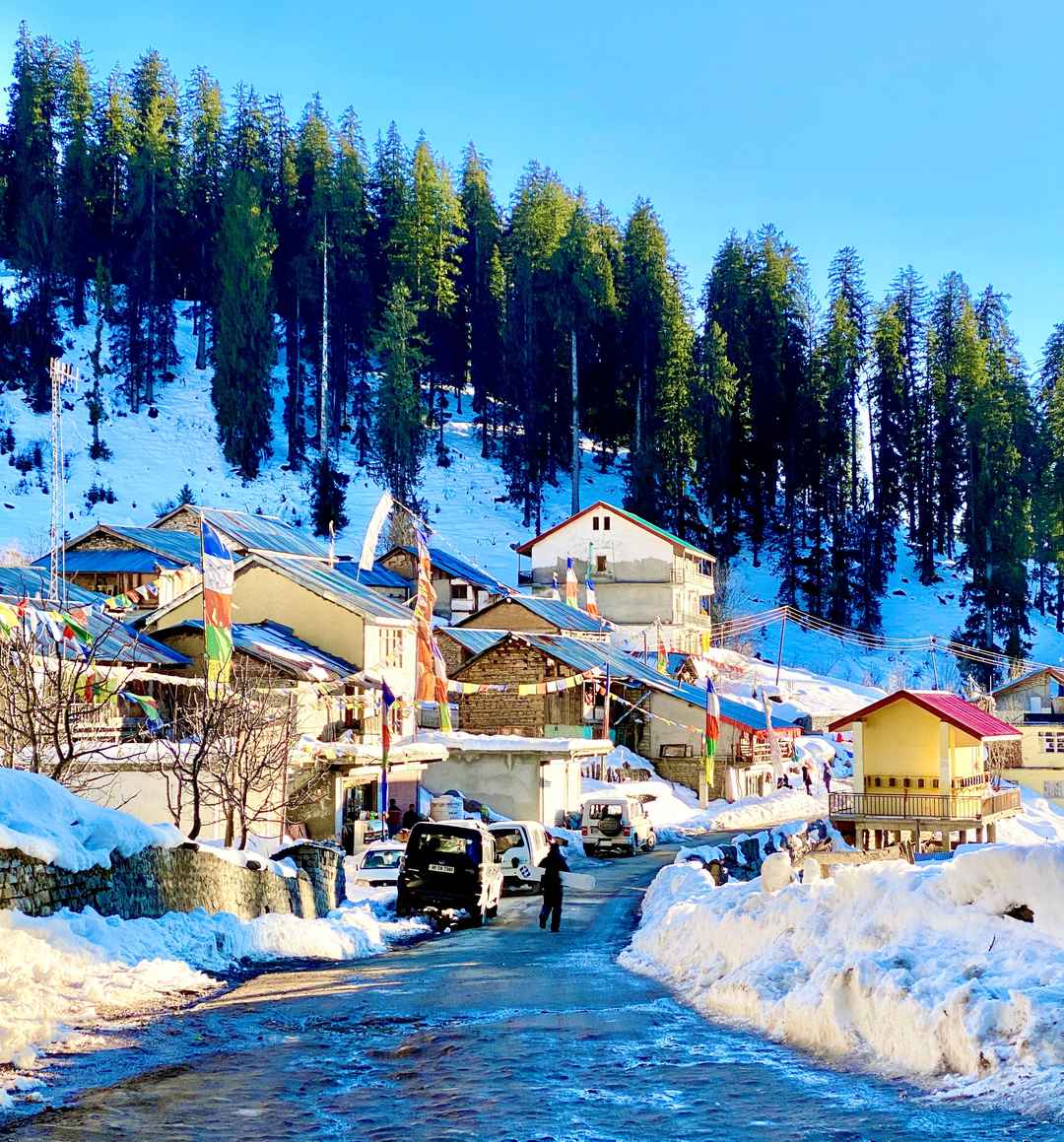
India occupies an odd middle position. Formal hitchhiking is not a widespread cultural practice, and city traffic makes the roadside approach unworkable. But lifts on truck routes, in shared jeeps and on remote mountain roads are commonplace, and in the high Himalaya they are often the only transport that exists — anyone who has done the long approaches to India's big climbs has ridden in the back of something they did not pay for. The etiquette is different: it is less a thumb at the roadside than a conversation at a dhaba, and offering to contribute to fuel is normal rather than insulting.
The safety conversation, without the mythology
Two things are true at once, and most writing on this picks one.
The first: the statistical risk was always smaller than the cultural fear, and remains so. The second: the risk is not zero, it is not evenly distributed, and the consequences of the rare bad outcome are severe enough that "the odds are fine" is not an adequate answer on its own.
The asymmetry is the part that matters most. Risk falls very unevenly by gender, and experienced women hitchhikers generally operate under stricter rules — travelling in pairs, declining rides that feel wrong without explanation, refusing to be dropped anywhere but a populated place. Those are not overcautious. They are the working practice.
The rules that experienced hitchhikers actually follow are unglamorous: talk to the driver through the window before getting in, and treat any hesitation as a decision; keep your bag with you rather than in the boot, so leaving is always possible; send the number plate to someone before you set off; never accept a lift that ends somewhere isolated; sit where you can open a door. And the single most important one — refusing a ride costs you forty minutes, and forty minutes is cheap.
If any of that reads as too much friction for a holiday, that is a legitimate conclusion, and the platforms exist for exactly that reason.
What you are actually buying with the wait
Modern travel is organised around the elimination of uncertainty. You book the seat, you know the arrival time, the app shows the car approaching, the review tells you what the room looks like. Every layer of the industry sells the removal of one more unknown, and that is a real service — most people, most of the time, want it.
The cost of removing all the unknowns is that you arrive at a place having met nobody on the way. The journey becomes a gap between two experiences rather than an experience itself.
What hitchhiking sells is the opposite: forty minutes of nothing, followed by four hours with a person who has no reason to perform for you and whom you will never see again. That combination — no transaction, no future, no audience — produces conversations that are structurally impossible to buy. People tell strangers in cars things they do not tell their friends, because the stranger is leaving.
That is the honest pitch, and it is a narrower one than the usual copy about freedom and the open road. You are not buying adventure. You are buying unmediated contact with people, at the price of your own schedule. Whether that is worth it depends entirely on how much your schedule is worth to you.
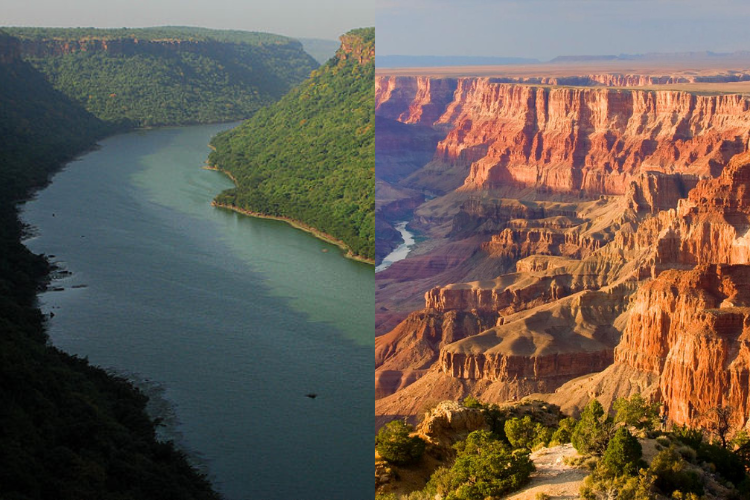
The same trade shows up everywhere in travel. It is why the unvisited ravines of the Chambal feel different from a canyon with a viewing platform, and why the parts of a trip people remember are almost never the parts that went to plan — including, sometimes, the cities you only meant to pass through.
If you are going to do it
Start short and start easy. A two-hundred-kilometre leg on a two-lane road in a country where it is common, not a first attempt across a motorway network.
Stand where a car can stop safely and where the driver sees you for several seconds — the exit of a service station, a roundabout approach, a town edge. Never the hard shoulder of a motorway. Check the law: in most of Europe and North America hitchhiking itself is legal, but standing on controlled-access carriageways is not, and enforcement is real.
Write the destination on a sign, look like you have somewhere to be, and make eye contact. Carry water, a warm layer and enough cash to solve the problem yourself if the day fails. Have a plan for being dropped in the wrong place after dark, because it will happen.
And accept the actual bargain, which is not romantic: you are trading control over your day for the chance of an encounter. Some days you get four hours with a retired long-haul driver who explains the entire economics of the route you are on. Some days you stand in the rain for two hours and then take the bus. The second kind is more common, and the first kind is why people keep going back.