The Hanging Gardens Standoff: Mumbai's Reservoir Nobody Can Fix
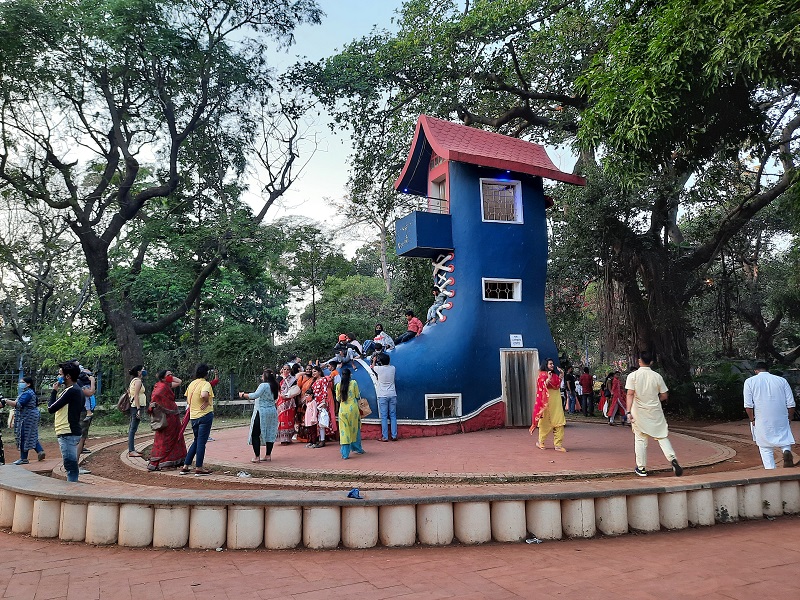
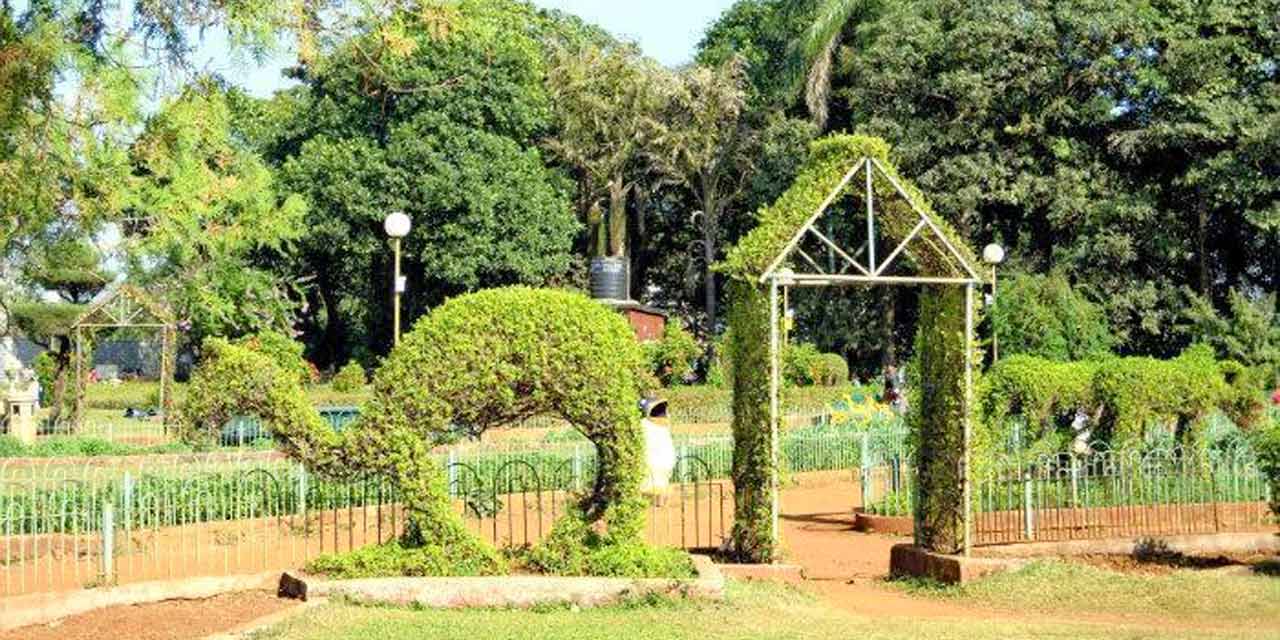
The Hanging Gardens on Malabar Hill are the calmest public space in south Mumbai. Terraced lawns, animal-shaped hedges, joggers at six in the morning, elderly residents on benches by nine, the best free view over Back Bay in the city.
Underneath the lawns, holding them up, is a masonry water reservoir built in 1887. It supplies about 147 million litres of water a day to south Mumbai. Almost nobody walking on the grass knows it is there.
For three years now, the city has been unable to decide what to do about it — and the reason the argument will not resolve is not really about engineering, or trees, or money. It is about what happens when two public goods are stacked on top of each other on the same plot of land.
What is actually under the garden
The Malabar Hill Reservoir is one of the oldest pieces of working infrastructure in the city. It sits at the top of the hill, which is the whole point: elevation gives you gravity-fed distribution across the low-lying peninsula below, without pumping. Water arrives from the lakes outside the city, sits here briefly, and flows down under its own weight.
The reservoir is divided into five compartments and roofed over. In 1881 the municipality laid a garden on top of that roof, partly for amenity and partly for a practical Victorian reason: covering a drinking-water reservoir with soil and planting keeps it cool, dark and clean. Pherozeshah Mehta Udyan, as it is formally called, was never a park that happened to be near a reservoir. It is the reservoir's lid.
A structural audit in 2022 flagged problems with that century-old masonry. In February 2022 the Brihanmumbai Municipal Corporation approved a reconstruction and augmentation plan costing roughly ₹698 crore. When the details became public in September 2023 the city discovered what reconstruction meant in practice: the reservoir would be demolished and rebuilt over about seven years, the entire landscaped area above it would be dismantled, and roughly 350 mature trees would be uprooted and relocated.
The response was immediate and it has not stopped since.
The Stacked Asset Problem
Here is the frame that makes this dispute legible, and it applies far beyond Malabar Hill. Call it the Stacked Asset Problem.
A stacked asset is two distinct public goods occupying the same square metres, where maintaining the lower one requires destroying the upper one. A reservoir with a park on its roof. A metro line under a heritage precinct. A drainage culvert under a market. Flyovers over street life.
Stacking is efficient. In a city where land trades at some of the highest prices on earth, putting a garden on a reservoir roof is exactly the kind of decision a competent municipality should make, and in 1881 it was.
The problem arrives at maintenance, and it has a structural asymmetry built into it. The upper asset is visible, used daily, emotionally held, and has a constituency that can be assembled in an afternoon. The lower asset is invisible, used constantly by people who do not know they are using it, and has no constituency at all — only engineers and a line in a budget.
So when the two come into conflict, the visible asset wins the public argument almost regardless of the engineering merits. Not because the public is wrong, but because only one of the two things has anybody who will show up for it. The residents defending the garden can point at 350 trees. Nobody can point at a reservoir compartment.
And the corollary is the part that should worry any city: invisible infrastructure tends to be maintained late, because every proposal to maintain it arrives looking like an attack on something people love. Stacked assets do not fail gracefully. They fail at the moment the deferred maintenance runs out.
Why fixing a reservoir requires building another one
The technical crux is simple and it is where the whole fight actually lives.
To repair or rebuild a water tank, you have to empty it. Emptying this one means south Mumbai loses a large share of its supply for the duration — and the duration, on the original plan, was years, not weeks. So the BMC's position has consistently been that any serious work requires a substitute tank built first, brought online, and used to carry the load while the old compartments are taken out of service one at a time.
After the 2023 protests, the corporation shelved full demolition and moved to a phased repair strategy. But phased repair still requires the same thing: somewhere for the water to go while a compartment is offline. The revised proposal is a 52 MLD three-tier alternate tank, sited on a plot behind the gardens currently occupied by staff quarters. Cost estimates for the alternate tank alone have been quoted in the range of ₹700 crore to ₹1,000 crore. The revised design brings the number of affected trees down from 350 to 76.
An expert committee of eight members was convened in November 2023. By March 2024 it had split. The IIT Bombay contingent recommended an alternate tank of about 52.44 MLD. The members representing residents and architects concluded the reservoir needed no demolition or reconstruction for another ten to fifteen years and was in no danger of collapse. Two reports, opposite conclusions, one neutral civic official in the middle. IIT Roorkee was brought in for a third opinion in June 2024.
Three years, four plans, no decision
In June 2024 the guardian minister announced the new tank proposal would be scrapped and repairs done in place, saving 389 trees. Residents treated it as settled.
It was not. By April 2026 the BMC was back with the 52 MLD alternate tank, and a meeting at the Hanging Gardens between residents, civic officials and the local MLA ended after an hour with no breakthrough. The minister argued that the original plan had been far worse — it would have taken the gardens entirely — and that both the alternate tank and the repairs remain necessary given the area's demand. He suggested putting a public amenity on the tank's roof: parking, or a garden for senior citizens.
Which is, of course, a proposal to solve a stacked asset problem by creating another stacked asset.
Residents wrote to the municipal commissioner calling the proposal unlawful and unnecessary, arguing that the site falls within a no-development zone and a green heritage precinct, and that if a tank is needed it can be built somewhere else within pipeline reach. Environmental campaigners put the question more bluntly: why spend ₹700–1,000 crore on an additional tank that, on the residents' reading of the engineering, is not required?
The residents' argument is not obviously wrong
It would be easy to file this as NIMBYism — wealthy Malabar Hill residents protecting their view. That reading misses a substantive technical claim.
The residents' engineers argue that the Malabar Hill Reservoir does not function primarily as storage. It functions as a transit facility: water flows in and flows out continuously through the day, with the tank acting as a buffer and a pressure head rather than a reserve. If that characterisation is right, the working volume needed at any moment is much smaller than the nominal capacity, and a compartment can be taken offline with pumping adjustments and network rerouting rather than a whole new 52 MLD structure.
The BMC's engineers disagree, and they are the ones who carry the consequences if south Mumbai's supply fails. Both positions are defensible. What the city has not produced is an authoritative, published, independently reviewed hydraulic model that would settle it — which is why three years and multiple expert panels have generated more reports than resolution.
That gap matters more in Mumbai than almost anywhere, because the city's entire water system is built around a short, violent supply season. Everything the lakes will hold arrives in about four months of southwest monsoon, the same system that explains why India is not a desert, and the distribution network exists to ration that windfall across the other eight months. A tank at the top of Malabar Hill is one component in a system with very little slack anywhere in it.
What both sides are actually defending
Strip away the crore figures and the two camps are defending the same thing from opposite ends.
The residents are defending continuity you can stand in. South Mumbai has lost an enormous amount of its open ground to development over four decades, and the Hanging Gardens are one of the few large, free, shaded public spaces left on the peninsula — a place where the city is not charging you for a seat. Trees that are eighty years old cannot be replaced by saplings within the lifetime of anyone objecting. Relocating a mature tree is, in practice, often a slower way of killing it.
The engineers are defending continuity you cannot see. A reservoir failure in south Mumbai would not be an inconvenience; it would be a multi-day supply emergency in the densest part of the city, and the people most hurt by it would not be the people on Malabar Hill.
Both are arguing for the future of the same neighbourhood. They differ on which invisible catastrophe is more likely: an empty tap or an empty hilltop. And because one of those is easy to picture and the other is not, the argument is not a fair fight — which is the Stacked Asset Problem doing its work.
It is worth visiting with all of that in mind. The gardens sit a short walk from the Kamala Nehru Park and the rest of the Malabar Hill circuit, and they belong on any serious itinerary of the city's landmarks — not as a picturesque stop, but as the one place where you can stand on Mumbai's nineteenth-century plumbing and watch the twenty-first century fail to agree about it.
What happens next
Three things determine how this ends.
The first is whether a single authoritative structural and hydraulic assessment is commissioned, published in full, and accepted by both sides in advance as binding. Everything since 2022 has failed for lack of that. Duelling expert reports do not converge; they entrench.
The second is the legal status of the site. If the plot behind the gardens is genuinely within a no-development zone and a heritage precinct, that question gets answered in a courtroom rather than a meeting room, and the timeline extends by years — during which the reservoir continues ageing.
The third is the thing nobody involved wants to say out loud: the most likely outcome of a deadlock is neither plan. Not reconstruction, not the alternate tank, but continued deferral, another audit, another committee, and a 139-year-old masonry structure carrying south Mumbai's water for another decade because no version of fixing it is politically survivable.
That is how stacked assets usually resolve. Not with a decision, but with a delay that runs until the lower asset makes the decision for everybody.
For visitors in the meantime: the gardens remain open, they remain free, and the view over Back Bay at sunset remains the best argument either side has. Elsewhere in the country the same tension between preservation and use plays out across India's older and stranger sites — but rarely with a city's water supply sitting directly underneath.
Sources
- Free Press Journal — Malabar Hill Reservoir row deepens as Hanging Gardens meeting ends in deadlock (April 2026)
- Free Press Journal — BMC scraps new tank proposal, saving 389 trees (June 2024)
- Free Press Journal — BMC reduces tree felling for Malabar Hill reservoir project
- Free Press Journal — Residents warn BMC's 52-MLD alternate tank threatens green cover
- Hanging Gardens of Mumbai (Pherozeshah Mehta Udyan) — background and history