Why You Can't Stop Scrolling — Even When It Doesn't Feel Good
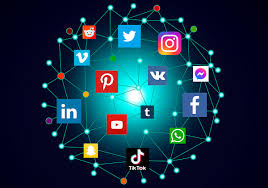
You pick up your phone to check one thing. You look up and forty minutes are gone. And here's the strange part: you didn't even enjoy it. The reason is one of the most unsettling discoveries in neuroscience — and it explains the century we're living in.
You reach for your phone to check one message. A while later you surface — thumb aching, eyes dry, forty minutes vanished — and you notice something you almost never stop to notice: you didn't enjoy any of it. There was no burst of joy, no memory worth keeping, nothing you'd call pleasure. And yet you kept going, post after post, as if pulled. Here is the question almost no one asks, because the answer is uncomfortable: if it didn't even feel good, why couldn't you stop?
The answer isn't that you're weak, or lazy, or addicted to happiness. The answer is that somewhere in the last two decades, a handful of companies discovered a seam inside the human brain that had been hidden for millions of years — a crack between two feelings we always assumed were the same thing. Then they built a trillion-dollar industry by prying it open. To understand the century we're now living in, you have to understand that crack.
The scarce thing was never information
In 1971, long before the internet, the economist and Nobel laureate Herbert Simon wrote a sentence that reads today like a prophecy: "a wealth of information creates a poverty of attention." His insight was simple and permanent. When information becomes infinite, the thing that becomes precious is not information — it's the human attention that can receive it. There are eight billion pairs of eyes on Earth and only twenty-four hours in each day. That fixed, unstretchable supply of human attention is, quite literally, the rarest resource in the modern economy. And where something is scarce and valuable, someone will always build a business to mine it.
That's the first thing to understand about the app in your hand. You are not its customer. You are its mine. The customers are advertisers; the product being sold is your attention; and the app is the machinery that extracts it. A free platform isn't a gift. It's a deal in which the price is paid in the one currency you can never earn more of.
The crack in the brain: wanting is not liking
Now the seam. For decades, dopamine has been called the brain's "pleasure chemical" — the hit of happiness you supposedly get from a like or a notification. That popular story is wrong, and the truth is far more important. The neuroscientist Kent Berridge spent a career showing that the brain runs two separate systems: "wanting" (craving, seeking, the pull toward a reward) and "liking" (the actual pleasure when you get it). They feel like one thing. They are not. Dopamine, Berridge found, drives wanting — the restless motivation to pursue — and has almost nothing to do with liking, the fragile flicker of genuine enjoyment. You can want something intensely and enjoy it barely at all. Addiction, in his theory, is exactly that: wanting cranked to a scream while liking stays a whisper.
Read that again, then look at your phone. Because this is the crack the industry found.
The slot machine you carry
The method is not a mystery; it was borrowed, deliberately, from the most addictive machine ever built: the slot machine. In the 1930s, the psychologist B.F. Skinner discovered that the most compelling reward is not a reliable one but an unpredictable one — the "variable reward." A pigeon that gets a pellet every single time loses interest; a pigeon that gets one at random pecks forever. Slot machines run on this. So does the pull-to-refresh on your feed: you tug down, the wheel spins, and maybe there's something good — a like, a message, a video that hits — and maybe there's nothing. That "maybe" is the entire engine. As the former Google design ethicist Tristan Harris put it, a phone is "a slot machine in your pocket." Every refresh is a lever pull. The unpredictability is not a bug. It is the product.
Stack Skinner's variable reward on top of Berridge's crack, and you get the trap in one sentence: the feed manufactures relentless wanting — pull, refresh, maybe — while delivering almost no liking. The loop is engineered never to close. That empty feeling after an hour of scrolling isn't a sign the machine failed. It's the machine working perfectly. You were meant to want the whole time. You were never meant to be satisfied — because a satisfied user stops pulling the lever.
The Want–Like Gap
Picture two lines on a graph, running left to right as the minutes pass. One line — wanting — climbs and stays high, jittery, alive, forever reaching for the next post. The other line — liking — barely lifts off the floor. The space between them is where the entire attention economy lives. Call it the Want–Like Gap: the engineered distance between how badly you want to check and how little it actually gives you back. The wider a platform can hold that gap open, the more of your scarce attention it can mine, and the more it earns. Your compulsion and your emptiness are not two separate problems. They are the same profit, seen from the inside.
What this reveals about being human
Here is the part that reaches past phones. The Want–Like Gap was not invented by Silicon Valley. It was installed in us by evolution. For most of human history, a brain that wanted endlessly — more food, more territory, more status, more safety — outlived a brain that felt satisfied and stopped. Wanting kept our ancestors moving; lasting pleasure would have made them sit still and die. So nature built us to seek far more than we savour. That ancient, useful gap between desire and contentment is the oldest thing about us — and the attention economy's genius, and its cruelty, is that it found that gap and turned it into a revenue model. When you can't stop scrolling, you are not malfunctioning. You are running exactly the software that kept your species alive — pointed, now, at a screen designed by people who understood it better than you do.
What comes next — and the only real defense
This is not a story that ends with social media, and that's why it matters more each year. The same machinery is spreading into everything with a feed and a "maybe": shopping, streaming, dating, news, and now AI systems tuned to keep you engaged. The scarce resource of this century will not be data or computing power. It will be a human mind that can still decide, for itself, what is worth wanting. That is the quiet, radical skill the next hundred years will demand — not more information, which we are drowning in, but the reclaimed ability to close the gap on purpose: to notice the pull, feel how little the reward returns, and choose to want something that actually gives something back. Herbert Simon saw the poverty coming half a century ago. The way out of it was never to get more. It was to want less, and better. The next time your thumb reaches for the refresh without being told to, you don't have to obey it. You only have to notice it — and remember that the feeling isn't hunger. It's a machine, asking you to pull the lever one more time.
Sources
- Berridge & Robinson — Liking, Wanting, and Incentive-Sensitization (Univ. of Michigan)
- Berridge — the debate over dopamine's role in reward (PubMed)
- Herbert Simon on attention — Common Reader (WashU)
- Smartphone Addiction: The Slot Machine in Your Pocket — YaleGlobal
Keep exploring: why countries ban each other's apps · the science of synesthesia.