Why Countries Ban Each Other's Apps — and the Quiet Return of Borders to the Internet
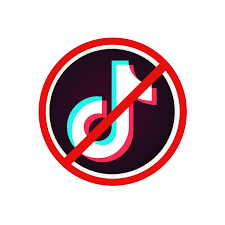
One night, the app that 200 million Indians used simply vanished. It hadn't crashed. A border had been drawn — one you couldn't see. That night was an early sign of the biggest, least-noticed shift on the internet.
On a summer night in 2020, the roughly 200 million Indians who had TikTok on their phones opened the app and found nothing. It hadn't crashed. The servers were fine. The videos still existed. What had changed was invisible and enormous: the Indian government had decided that this app — and 58 others linked to China — could no longer operate inside the country's borders. Days earlier, Indian and Chinese soldiers had fought and died in a Himalayan valley. Now the fight had moved somewhere no one could see it: onto the phone in your hand. The official reason was national security. But the deeper thing that happened that night is something we're still living through today, from Washington to Brussels to Beijing — and almost nobody has named it clearly.
Here is the question worth sitting with: how can you "ban" an app? It has no country. It's just code. The answer is the story of how the most borderless thing humans ever built quietly grew borders — and why the innocent-looking app on your screen is, to a government, something closer to a foreign embassy operating on its soil.
The internet's original promise — and the fine print
The early internet came with a beautiful pitch: one world, no borders, information flowing freely to everyone. For a while we believed it. But the pitch had fine print nobody read. Every time you use an app, you hand it something — where you are, who you know, what you watch, what you pause on, what you believe. That exhaust of data has to live somewhere: on servers, in a building, in a country, under some government's laws. And whoever controls that building can, in theory, read it, shape it, or shut it off. The borderless internet was quietly built on very physical ground — and ground, as humans have always known, belongs to someone.
The Three Keys
To see why a government bans an app, stop thinking of it as an app and start thinking about the three keys it holds inside your country.
Key one — the data. A popular app knows the private movements, contacts, and habits of millions of your citizens, and may store that data where a foreign government can reach it. India's order was explicit: it feared user data being "transmitted... to servers which have locations outside India" and mined by elements "hostile to national security." The United States echoed this in 2024, arguing that China's laws could compel TikTok's parent company to hand over American data. Whether that fear is proven or precautionary is genuinely debated — but the key is real.
Key two — the algorithm. An app doesn't just collect what a nation says; it decides what a nation sees. A recommendation engine controlled from abroad could, in principle, quietly amplify or bury ideas at national scale. You don't have to believe it's being done to understand why a government would refuse to let a rival hold that dial.
Key three — the dependence. When tens of millions of citizens, creators, and businesses run their livelihoods on foreign infrastructure, the foreign owner gains leverage — economic and political. A nation that can be switched off is a nation that can be pressured.
When a government decides a foreign power holds all three keys — its people's data, its people's feed, and its people's dependence — the app stops looking like entertainment and starts looking like a vulnerability. That is the moment bans happen.
The catch nobody wants to say out loud
But here is where an honest explainer has to slow down, because the story is not one-sided, and the debate is real. Banning apps to reclaim the keys comes at a cost, and reasonable people disagree fiercely about whether it's worth it.
Critics point out that the same logic used to protect citizens can be used to control them: "national security" is an elastic phrase, and governments from many political systems have used data-localization and app bans to tighten their grip on what their own people can see and say. Analysts have described some bans as "digital counterstrikes" — as much about signalling resolve to a rival and to one's own public as about any proven data theft. And technologists warn of the "splinternet": if every country walls off its own slice, the single global internet fractures into a patchwork of national enclaves, which can harm privacy, human rights, small businesses, and the free flow of ideas the internet was built to carry. India, the United States, China, Russia, the EU, Vietnam — each is drawing these lines differently, for different reasons, with different trade-offs between security, freedom, and openness. There is no clean answer here, and any explainer that pretends there is one is selling something.
What this reveals about being human
Step back far enough and the deepest pattern isn't about technology at all. It's about us. Give human beings any commons — a stretch of land, a fishing sea, the open sky, outer space — and eventually we will carve it into territory, claim it, and defend it. We did it with continents. We did it with airspace. We are now doing it with data. The "splinternet" is not a strange new glitch; it is the oldest human instinct — this is mine, and I will decide what crosses its edge — arriving, at last, in the one place we swore would stay borderless. The app ban is where our most ancient impulse meets our most modern invention.
And it puts India at the centre of the story, not the edge of it. As the world's largest internet market and an early mover — banning TikTok and dozens of apps in 2020, and pushing to keep Indians' data on Indian soil — India is helping write the rulebook for how a democracy draws digital borders. What it chooses will shape what "sovereignty" means for billions of people this century.
Where this goes next
The keys are only getting bigger. The next borders won't be drawn around a video app but around the infrastructure of the age itself: the cloud, the undersea cables, the chips, and above all the AI models being trained on the world's data. Expect more walls, more "sovereign" versions of everything — sovereign cloud, sovereign AI, sovereign data — and a permanent tension that will define the internet's second half: the pull between the freedom of one connected world and the safety of many separated ones. So the next time an app blinks out of existence overnight, don't file it under tech news. It's a border being drawn where you can't see it — and the map of the world is being redrawn, quietly, in data, on the phone in your hand. The only real question left is who holds the pen, and what it costs the rest of us when they use it.
Sources
- India bans TikTok + Chinese apps (2020) — CNBC
- India bans TikTok plus 58 other Chinese apps — MIT Technology Review
- US Supreme Court upholds divest-or-ban law — Holland & Knight
- National-security concerns over data localization — CSIS
- The problem with India's app bans — Atlantic Council
Keep exploring: why you can't stop scrolling · India's "mystical" places, explained.