Space Tourism, Explained: Why Touching Space Is (Almost) Cheap and Staying There Costs a Fortune
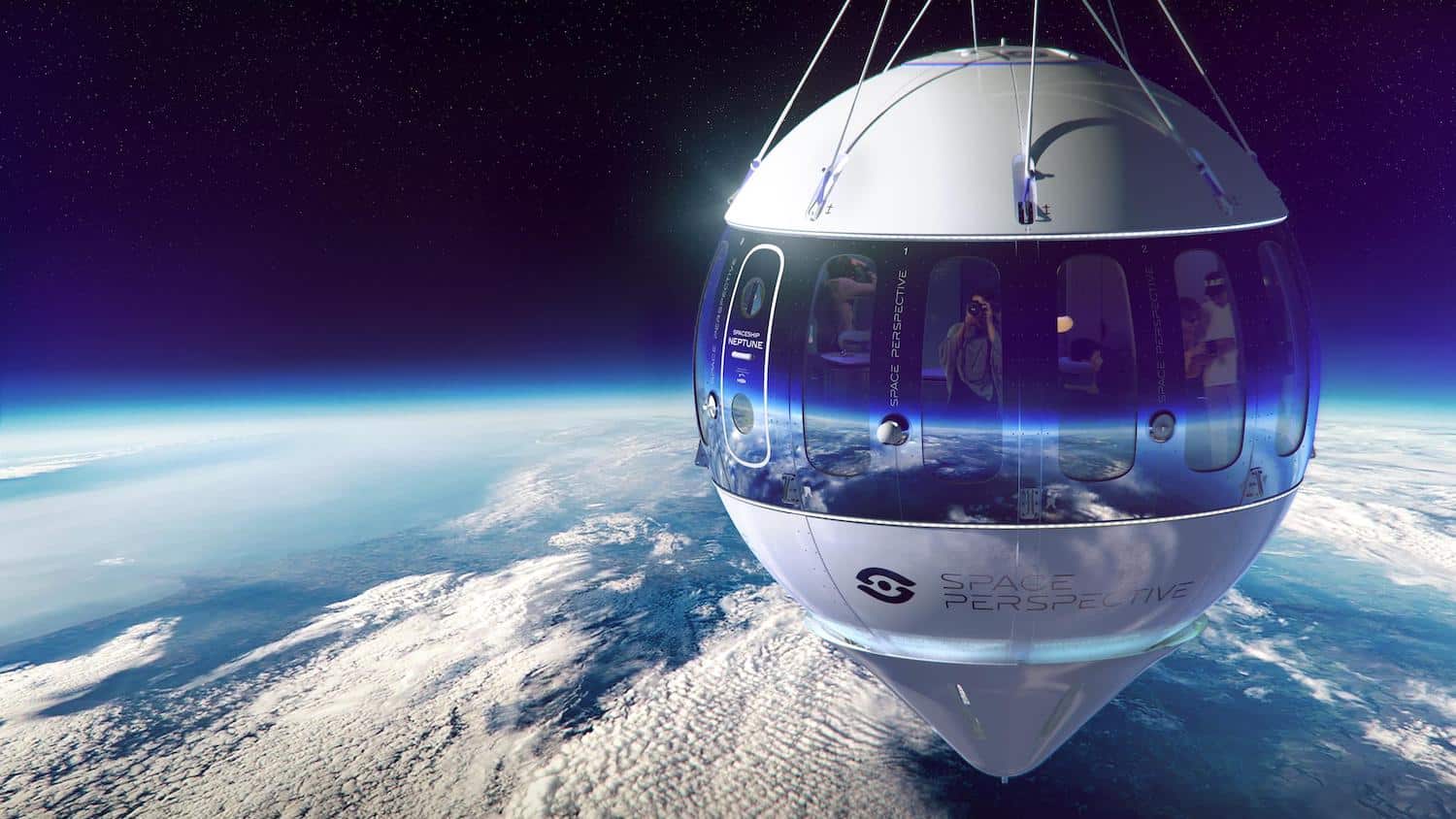
Two travellers float in the same black sky, above the same blue curve. One paid for a supercar. One paid for a jumbo jet. The reason isn't luxury — it's the most beautiful wall in physics.
Picture the exact second the sky goes black. The engine falls silent, the weight lifts off your chest, and you drift up against your straps — weightless, watching the blue curve of the Earth bend away below you. Now picture the stranger who floated in this same black last week, above this same curve, seeing this same impossible view. You paid for a supercar. They paid for a wide-body jet. Same silence. Same weightlessness. Same line crossed into space. And yet what they did was, by one hard measure, about twenty-five times more difficult than what you did — not fancier, not more comfortable, but harder, in a way stitched into the laws of the universe. The reason is one idea, and once it clicks, the entire strange business of space travel falls into place.
Here it is: "going to space" is secretly two completely different things. One is reaching a certain height. The other is reaching a certain speed. Almost everything — the price, the danger, the length of the trip, who gets to go — comes down to which of the two tickets you're actually buying.
Space is a speed, not a place
We imagine space as an altitude: climb high enough and you've "arrived." But height is the easy half. The hard half is staying up. To circle the Earth instead of falling back onto it, a craft has to move sideways so fast that, as it falls, the ground curves away beneath it exactly as quickly — so it keeps falling and never lands. That sideways speed, orbital velocity, is about 17,500 mph (≈ Mach 23). A craft that merely pops above the line and drops straight back needs only about 3,700 mph (≈ Mach 3). Identical dot on a map. Five times the speed. Two utterly different achievements.
The two tickets you can actually buy
| Suborbital — "touch space" | Orbital — "stay in space" | |
|---|---|---|
| Top speed | ~3,700 mph (Mach 3) | ~17,500 mph (Mach 23) |
| The experience | 4–6 minutes weightless, then you fall home | Days to weeks, circling Earth ~16× a day |
| The shape of the flight | A very tall throw — up and back down | A permanent fall that keeps missing the planet |
| Price (as of 2026) | ~$450k–$1M+ (Virgin Galactic, Blue Origin) | ~$55M+ per seat (SpaceX to the ISS) |
A suborbital trip is a tall throw: a few minutes at the top where you float, then gravity hands you back to Earth. An orbital trip is a fall so fast it never ends — you are, quite literally, falling around the world. That is not a bigger version of the same ride. It is a different law of nature.
The aha: you don't pay for distance — you pay for speed, and speed is billed by the square
Now the beautiful, brutal part. The energy a rocket needs doesn't grow with speed — it grows with speed squared. Orbit needs roughly 5× the velocity of a suborbital hop, so it needs about 5² ≈ 25 times more energy for the sideways motion alone — before you add the fuel to fight gravity and air for far longer, the bigger rocket to carry that fuel, and the inferno of re-entry from 17,500 mph. Stack it all up and you land almost exactly where the market prices it: tens of millions, not hundreds of thousands. The ~70× gap between the two tickets isn't a markup. It's Newton's arithmetic. Space isn't sold by the mile. It's sold by the square of the speed.
Isaac Newton saw this 300 years before anyone flew. Imagine a cannon on an impossibly tall mountain. Fire the ball gently and it arcs down to the ground. Fire it harder and it lands farther off. Fire it hard enough and its fall matches the curve of the Earth — and it never lands. It just falls, forever, around the planet. That is orbit, in a single picture. Suborbital tourism is Newton's slow cannonball, which comes home. Orbital flight is the cannonball fast enough to keep missing the ground.
Where India fits — and why it matters more than it looks
If the enemy is the crushing cost of speed, then the country that wins the future of space is the one that makes speed cheap — and here India has quietly built a reputation the giants envy. In 2014, ISRO's Mars orbiter Mangalyaan reached the Red Planet on the first attempt for about $74 million — less than the Hollywood film Gravity, and a fraction of NASA's $582-million MAVEN. That frugal-engineering DNA is now aimed at humans: India's Gaganyaan programme is preparing to fly Indian astronauts to orbit on an Indian rocket, with a planned Bharatiya Antariksh Station by 2035. Why does this matter for space tourism? Because the whole industry is waiting for someone to bend the velocity-squared cost curve — and a spacefaring nation whose signature is doing it for less is exactly the kind of force that could turn "a fortune" into merely "expensive."
What happens next — and why you should care
The countdown that matters isn't a calendar; it's a cost curve. Suborbital "touch space" trips will keep getting more common as a premium experience — the space equivalent of climbing Everest. The real revolution is reusability: flying the same rocket again instead of throwing it away is the one lever that attacks the square-law directly, which is why fully-reusable giants like SpaceX's Starship — and India's low-cost approach — matter more than any ticket sale. Over the next decade, expect the first commercial space stations and orbital "hotels" to replace the ageing ISS, prices for orbit to fall from tens of millions toward low millions, and nations like India to put their own citizens and stations in orbit. The deeper stakes: space is turning from a stunt into an economy — for tourism, manufacturing, energy, and defence — and whoever lowers the price of speed will own a piece of that economy. So the next time someone floats past a window with the Earth glowing beneath them, remember what their ticket really bought: not a place, but a speed — and the long human race to make that speed cheap enough for the rest of us.
Sources
- Suborbital vs orbital spaceflight — Space.com
- Orbital vs suborbital differences — Forbes
- Space tourism cost 2026 — Star Walk
- India's $74M Mars mission cost less than 'Gravity' — CNN
- India's Gaganyaan timeline; station by 2035 — Space.com
Keep exploring: the science of synesthesia · why Kerala is so green.